What Are Information Systems?
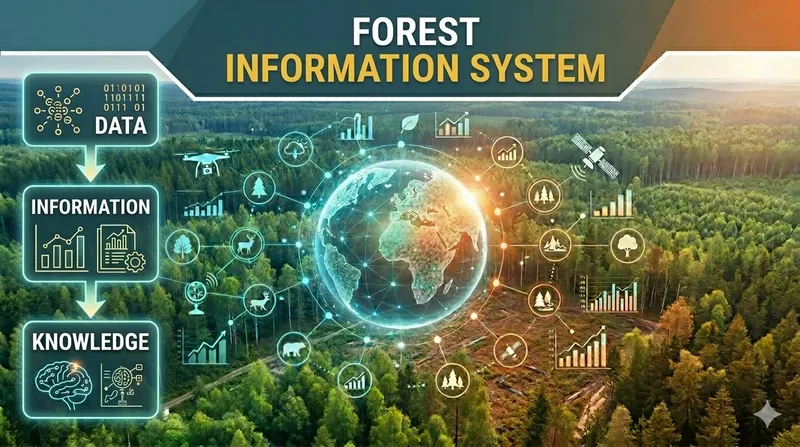
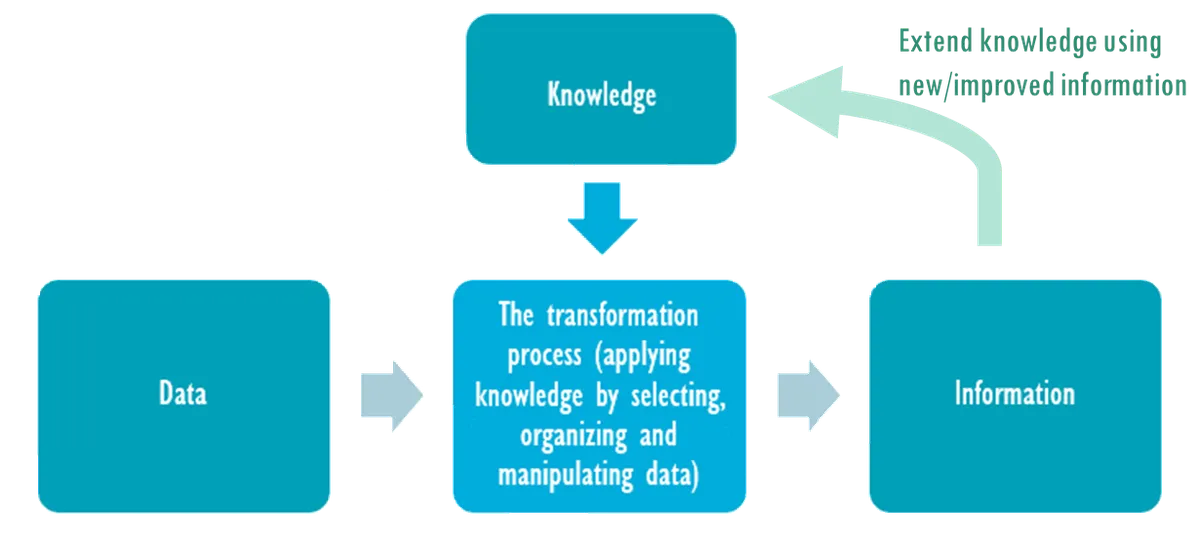
Information systems are about collecting, organizing, storing, processing, and distributing data. However, this is not really useful per se. The real value of information systems lies in their ability to provide information, increase our knowledge, and produce digital products that can be used to better understand reality, solve practical problems, and act more effectively in the real world.
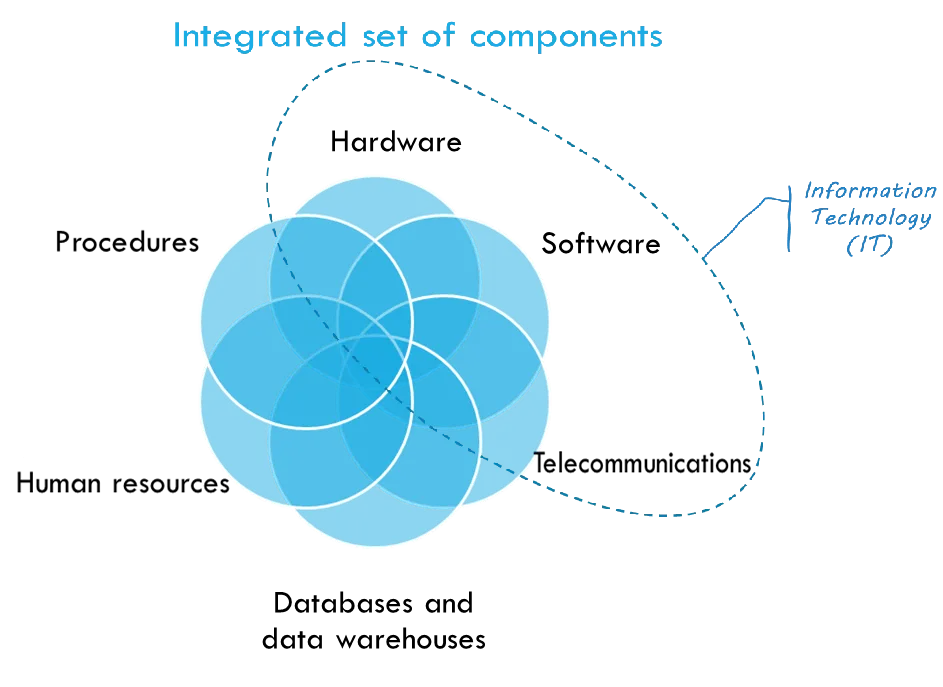
Technically, an information system is a set of components. Only some belong to the domain of technology: hardware, software, telecommunications. They are just a contemporary way of running databases and data warehouses. We should remember that the concept of data warehouses has been with us for many centuries – they were just called differently. They were called libraries.
Indispensable components of any information system also include procedures for dealing with information and human resources required to make it possible.
Why Do We Need Information Systems?
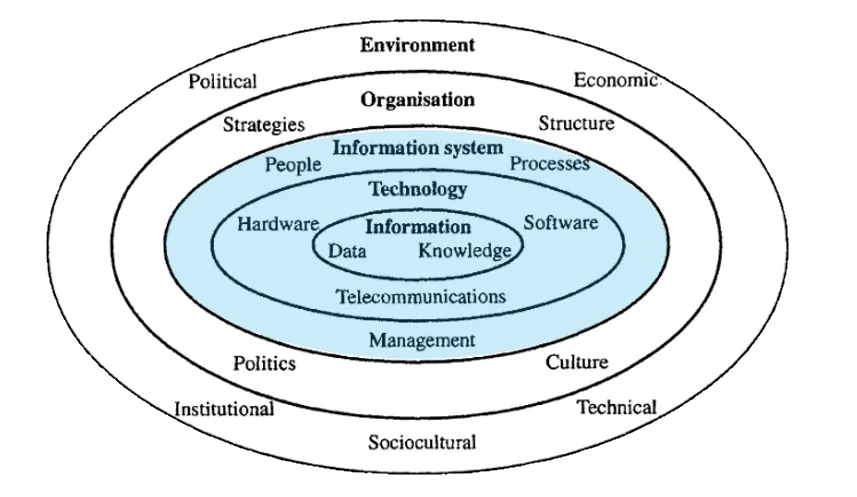
Information systems should be perceived as a type of social system, embedded in a wider social and cultural context. They are systems of communication within the organization and/or society.
Data is a set of raw real-world facts describing physical objects or events.
Information is a collection of facts organized so that they have additional value.
Knowledge is understanding relationships between data items and how that information can be made useful for a particular task or objective.
The term “information” is often confused and used interchangeably with “data”. However, for the sake of clarity we need to make the distinction. Data is raw numbers, but when arranged meaningfully, they become information with value.
For example: data describing individual trees has little practical value by itself. However, when enriched with relationships between individual trees (for instance in a single inventory sample plot), the informational value increases greatly. The ability of an organization to convert data into information enables efficient and informed decision-making.
Types of Information Systems
There are many ways to classify information systems: by where they are used or what technology they employ. However, classification based on the purpose they serve is preferable.
1. DSS (Decision Support Systems)
Computer programs intended to find and make efficient decisions. DSS processes information to provide decision-makers with options and information necessary for informed decisions.
2. RMS (Resource Management Systems)
Utility programs for resource accounting and distribution. Commonly used in business, but political institutions use them to control resources on a continuous basis.
3. ISS (Information Sharing Systems)
Programs to arrange internal structural operations of institutions and encourage information exchange between public authorities, economic, research and engineering corporations, forest management bodies, private corporations, and other organizations.
4. CSS (Communication Support Systems)
Specialized software for online use, plus web resources providing interactive processes to increase social engagement, thereby evolving a “network society.”
Information Is an Indispensable Factor in Forest Policy and Management
In forestry and forest science, information systems have value in several places. The first is forest policy.
- Forest policy is a complex, multi-disciplinary subject
- An effective forest policy needs informed decisions about the maintenance, protection, and use of forest resources
- Information technologies help retrieve, process, and provide information to institutions in an optimal way
- It is influenced by forest economics, ownership, management planning and law, climate change, bioenergy, afforestation, biodiversity, rural ecosystem services, land use policy, and infrastructure
Forest Information Systems (FIS) aid forest policymaking by gathering forest information to support informed choices, monitoring results, and refining policies.
FIS may also support forest management and operations as a tool to efficiently manage resources and facilitate communication between stakeholders and the general public.
Components of Forest Information Systems
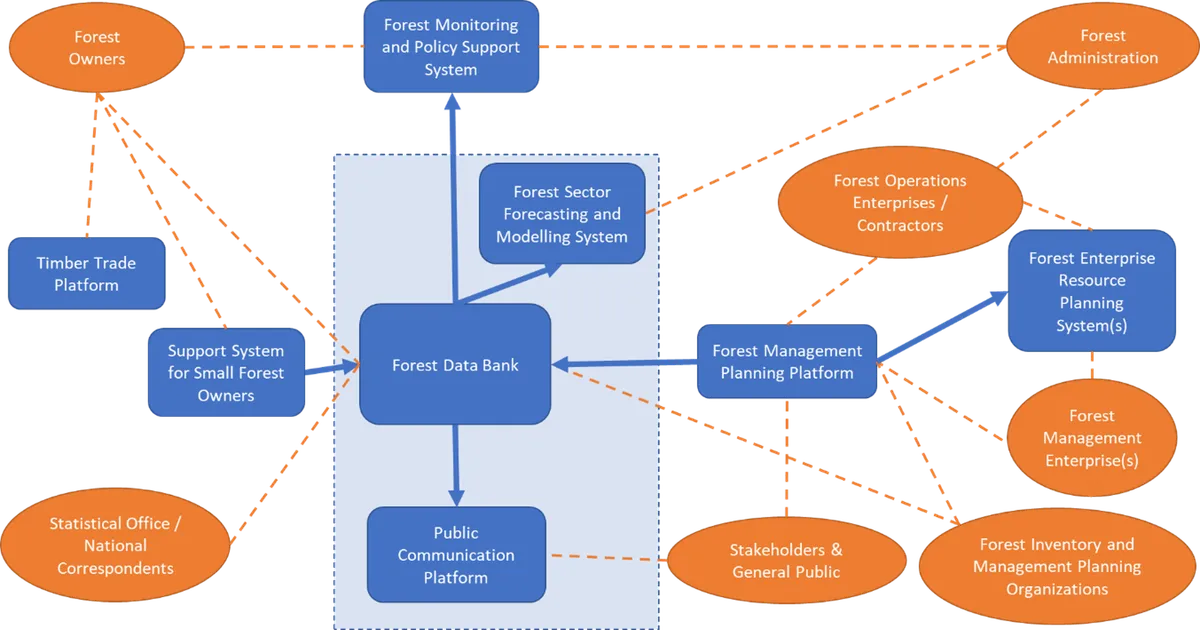
On various levels of forest management there are different actors: forest owners, public forest management bodies and government agencies, forest inventory, planning and monitoring organizations, public statistics, other stakeholders, and the general public. Their interests and actions can be supported by information systems.
One must bear in mind that there is no one-fit-for-all schema of information system infrastructure. As mentioned, an information system is a communication tool and is always located within an organizational structure and the environment it functions in. So the scope, purposes, and placement depend very much on legislation, administrative structure, even political and managerial traditions, the importance of the forest sector, the wealth of the country or organization.
Benefits of Having Forest Information System
We are so embedded in information technology that benefits of having a forest information system are rather obvious.
Information systems can improve operational efficiency, reduce costs, provide decision-makers with better, more complete information, and thereby improve forest ecosystem services and state governance.
They can provide the following types of data:
- Custom data for a specific task or decision-making process
- Custom formats which can be tailored to the needs of users
- Real-time data - particularly useful when rapid action is needed, like dealing with illegal logging or calamities
- Data about the past - particularly useful for reports, analysis, and business planning
Forest information systems can be helpful in several ways:
- Better understanding of current situations - ICT knowledge-management systems store data about the current state and provide tools to acquire it, including forest inventories and monitoring
- Predicting changes - ICT tools can use existing information to provide predictive statistics and modeling approaches
- Formulating solutions - ICT tools help manage knowledge on why things happen
- Implementing solutions - Properly used ICT tools increase operational efficiency, automate standard operations, and improve process quality
FIS Study
In 2023-2024, the Forestry and Timber Section of UNECE is running a capacity-building project to promote forest information systems in the Caucasus, Central Asia, and Eastern Europe. An outcome of this project is the study on forest information systems.
The study has a theoretical background on what information systems are, why we need them, their main functions, components, and benefits. Its second part outlines how to organize and manage FIS development and how to carry out actual FIS development.
The study focuses as much on technology as on governance structure, forest management goals, needs, and opportunities. Case studies on successful FIS implementations are included.
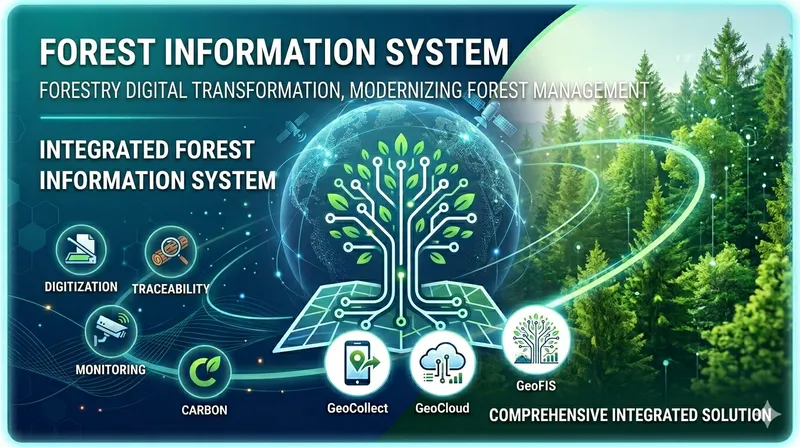
TLGeo applies these international FIS principles to Vietnam’s context with an integrated solution: GeoCollect - GeoCloud - Plugin.
Reference: UNECE - Introduction to Forest Information Systems